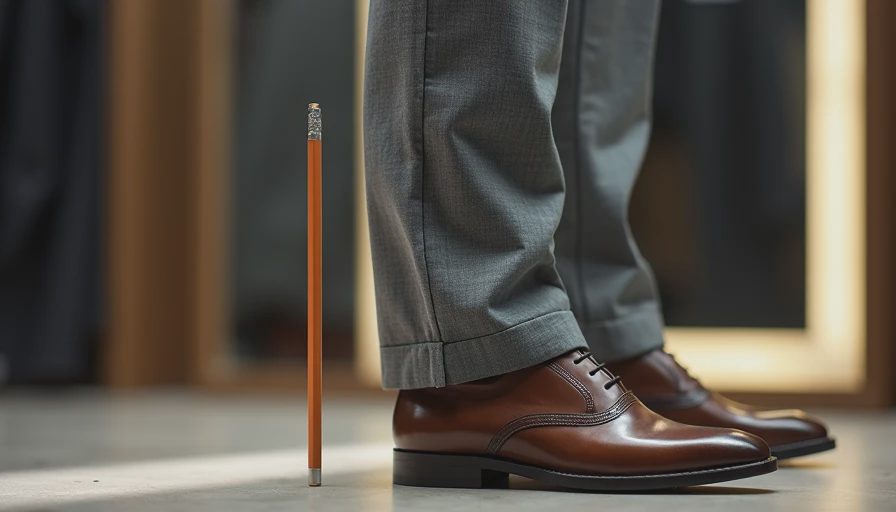
The Day I Explain Trouser Break to Teenagers
Every spring, a new crop of high school seniors comes in for their first real suit. They’re nervous, excited, and usually have no idea what “trouser break” means.
I sit them down, hand them a pencil, and give them the same 8th-grade level explanation I’ve been using for thirty years. By the end, they understand it better than most grown men.
Today I’m giving you that same talk.
What Trouser Break Actually Is
Trouser break is simply how the bottom hem of your pants touches (or doesn’t touch) your shoes.
It’s one of the most noticeable details in how a suit or pair of dress pants looks, yet one of the least understood by regular guys.
There are three main types:
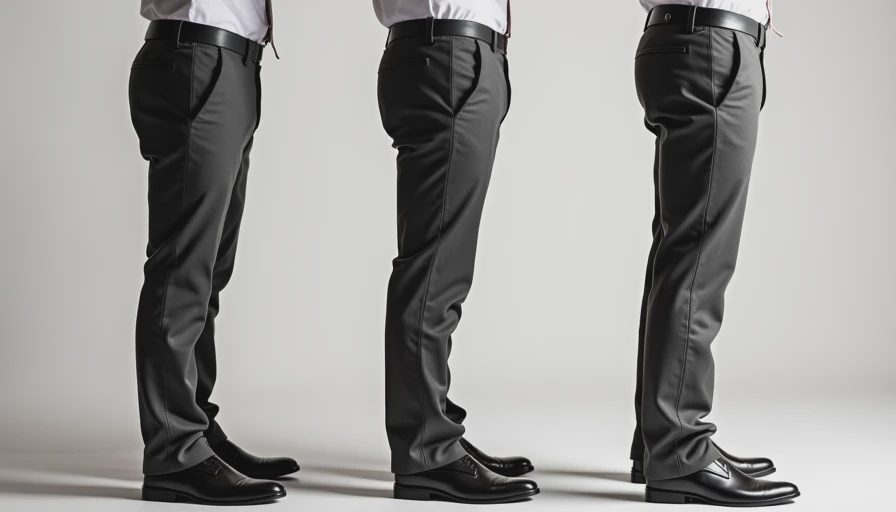
No break — The hem barely touches or just kisses the top of your shoe.
Half break — The hem breaks once, creating a small crease, then rests lightly on the shoe.
Full break — The hem breaks more noticeably, creating a deeper fold or “break” on the shoe.
The Pencil Trick (My Favorite Teaching Tool)
Here’s exactly what I do in the fitting room:
I hand the customer a pencil and say, “Hold this vertically against the front of your shoe, right at the top.”
Then I ask:
If the hem of the pants sits right at the top of the pencil → No break.
If it covers about half the pencil → Half break.
If it covers most or all of the pencil → Full break.
Simple. Visual. No fancy terms needed.
Which Break Should You Choose?
No Break
Looks modern and clean. Best for slimmer suits and younger guys. Shows off your shoes more. Requires precise tailoring. Can look too short if you’re not careful.
Half Break
The safe, classic choice for most Midwestern men. Works with most body types and most occasions. Forgiving and timeless.
Full Break
Traditional and more forgiving for larger thighs or if you sit a lot. Common in conservative business or formal settings. Can look sloppy if overdone.
For most guys buying their first good suit or dress pants, I recommend starting with a half break.
How to Check It Yourself in the Store
Put the pants on with the shoes you plan to wear.
Stand naturally in front of a full-length mirror.
Look from the side.
Walk a few steps. Sit down. Stand up again.
The break should look consistent whether you’re standing or moving.
If the pants bunch up heavily around your ankles when you walk, they’re probably too long. If there’s a big gap showing your socks when you move, they’re too short.
Common Mistakes I See
Buying pants too long and expecting the tailor to “fix it later.”
Wearing dress pants with casual sneakers (the break looks completely wrong).
Getting a full break with very slim pants — it just looks off.
Ignoring the break entirely and hoping nobody notices.
People do notice. Especially at weddings, funerals, and job interviews.
Real Stories from the Fitting Room
One teenager came in with his mom for prom. His dad wanted full break “like I used to wear.” The kid was tall and slim. We went with a half break. He looked sharp and modern. His dad actually thanked me later.
Another customer — a 45-year-old accountant — had been wearing pants with almost no break for years. Once we adjusted to a proper half break, he said his legs looked longer and his whole suit looked more expensive.
Small change. Big difference.
How Break Changes With Different Fabrics and Occasions
Lighter summer wool or cotton pants can handle less break. Heavier wool suiting often looks better with a bit more.
For business casual, I lean toward half break. For very formal events, a touch more break can feel more traditional.
The key is consistency. Your shoes, pants, and jacket should all work together.
A Simple Rule for Most Men
If you only remember one thing: Aim for a half break unless you have a good reason to choose otherwise.
It’s the most universally flattering and appropriate option for Midwestern men in most real-life situations.
When in doubt, less break is usually safer than too much.
Why This Detail Matters More Than You Think
Trouser break is one of those small details that separates “I threw this together” from “This guy knows what he’s doing.”
You don’t need to obsess over it. But getting it right shows that you pay attention to the little things — and that usually means you pay attention to the big things too.
My Final Advice
Next time you buy dress pants or a suit, take the extra two minutes in the fitting room. Use the pencil trick. Check it with your actual shoes on. Walk around. Sit down.
A proper trouser break won’t make you look like a fashion model. But it will make your outfit look intentional instead of accidental.
And that’s exactly what most of us are going for.
Try it on. That’s what the fitting room is for. And don’t be afraid to ask the person working the floor for their honest opinion.
We’ve been doing this a long time.


No comments yet — grab the first one.