An armani suit can look like a simple purchase until you stand under department-store lights with three different sizes hanging from your arm. I have watched men spend an hour worrying about the label and five seconds ignoring the shoulders. That is backwards. A good suit is judged first by fit, then by cloth and construction, and only after that by the name inside the pocket. I spent 30 years on a men's floor in St. Louis, and the men who came back happiest were usually the ones who bought the suit that fit their bodies, not the one with the loudest reputation.
Start with the shoulders and chest
The shoulders are the part of an armani suit that cannot be fixed cheaply. The seam should finish at the natural edge of your shoulder, not droop down your upper arm. If the shoulder is too wide, the jacket gives you a tired, sloping outline. If it is too narrow, the sleeve head pulls and creates a small ridge near the collar. An alterations tailor can shorten sleeves and adjust the waist. He cannot perform miracles on a shoulder line.
Button the jacket while standing naturally. You want a clean front without an X-shaped burst around the middle. A little room is better than a button straining across your stomach. Raise both arms, sit down, and reach forward as if you are taking a folder from a conference table. The jacket should move with you without pulling hard across the back.
I once helped a broad-chested customer who insisted he wore a 42 because that was the size he had worn since his forties. The 44 regular looked better immediately. We took in the waist and shortened the sleeves by half an inch. He walked out looking slimmer, not larger. The tag had changed by one number; the impression had changed completely.

Check the details that determine value
An armani suit often uses a finer, lighter cloth than the basic $250 to $400 suit hanging beside it. That can feel excellent indoors, but light cloth also shows wrinkles and wear sooner if you drive, travel, or sit at a desk all day. For regular office use, a medium-weight wool around 10 to 12 ounces is generally easier to live with than an exceptionally thin cloth. It presses well, hangs properly, and does not demand constant babysitting.
Look at the jacket lining, buttonholes, and trouser waistband. Loose threads are not a sign of quality, whatever the label says. The lapel should lie flat against your chest, and the collar should sit close to your neck without a gap. Trousers should have enough room to sit comfortably but should not puddle over the shoes. A plain navy or charcoal suit will earn more wear than a bright pattern bought for one wedding.
Price is another matter. Depending on the collection, retailer, season, and sale, an armani suit can cost several hundred dollars or well over $1,000. The higher price does not automatically mean better value for your closet. If you wear a suit twice a year, a $500 purchase that fits perfectly may serve you better than an expensive garment requiring delicate care and limited occasions.
Alterations are part of the purchase
A suit straight from the rack is a starting point, not a finished job. Budget roughly $50 to $150 for common work such as sleeve length, trouser length, and waist adjustment. Prices rise when a tailor must reshape the jacket or alter the shoulders. Ask for the jacket sleeves to show about a quarter-inch of shirt cuff when your arms rest at your sides. That small amount keeps the sleeve from swallowing your hand.
The trouser hem depends on your preference and the cut, but a slight break is the safest choice for most men. It creates one modest fold where the fabric meets the shoe. A heavy break looks sloppy, while no break can look too deliberate for a man who simply wants to dress appropriately. Bring the shoes you will actually wear. A dress shoe with a thin sole changes the trouser length compared with a thick-soled casual shoe.
Do not remove the tags until you have tried the complete outfit at home. Wear the shirt, belt, and shoes. Sit in the car. Walk around the kitchen. If the jacket feels tight only when you reach forward, that is useful information. The fitting room is where you catch the problem, not the morning of the ceremony.
Pick the right color and use case
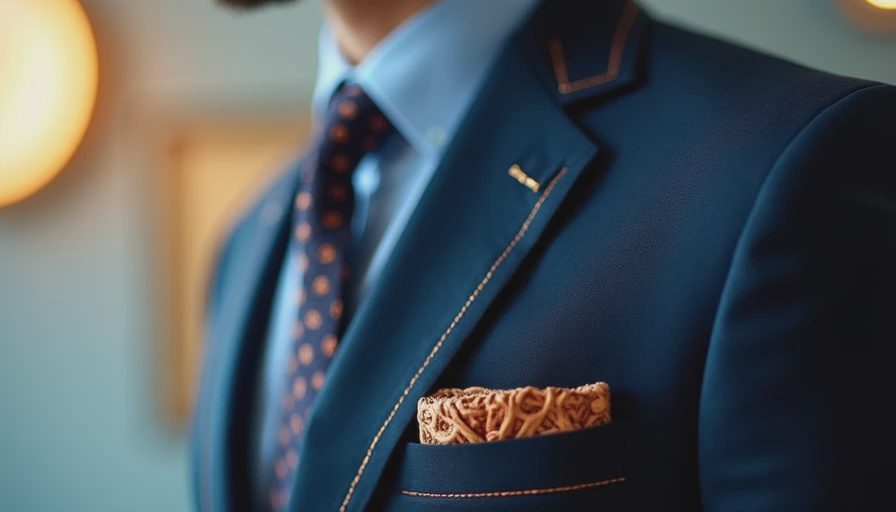
For a first purchase, navy is hard to beat. It works for business meetings, evening dinners, graduations, and most weddings. Charcoal is nearly as useful and can look a little more formal. Black has a narrower job: funerals, formal evening events, and certain professional settings. An armani suit in a subtle navy or charcoal pattern will usually earn more turns than one in a glossy black fabric.
Think about the shirts already in your closet. White and light blue shirts cover most occasions. A burgundy or dark blue tie adds enough interest without turning the outfit into a project. Brown or black shoes can work with navy, but black shoes are the safer choice with charcoal. Matching the belt to the shoes is still worth doing; it takes no extra time and prevents the outfit from looking assembled in the dark.
A man buying for one wedding may need a different answer from a man starting a new job. For the wedding, ask whether the suit can work with a white shirt and conservative tie. For work, consider how it looks after a full day of sitting. Clothing that looks sharp for ten minutes in a mirror can become uncomfortable by 3 p.m.
How to shop without paying for the label
Compare the garment with two or three suits in the same store. Feel the cloth, inspect the seams, and try each jacket with the same shirt. If the armani suit fits your shoulders but needs sleeve and waist work, ask the store tailor for a written estimate. A $900 purchase can become $1,050 quickly. That may still be reasonable, but you deserve to know the finished cost before paying.
Check the return policy, especially if the suit is marked final sale. Keep every receipt and alteration ticket. Avoid buying a jacket and trouser size separately unless the retailer allows it and the colors match under natural light. Even small differences between dye lots can show at the office.
Care matters after the sale. Use a broad wooden hanger, empty the pockets, and let the suit rest at least a day after wearing it. A fabric brush removes surface lint, while repeated dry cleaning can be hard on wool. Follow the care label and use a reliable cleaner. Most suits need airing and pressing more often than they need cleaning.
My practical buying test
An armani suit is worth serious consideration when the shoulders sit correctly, the collar touches your neck, the jacket buttons without strain, and the fabric suits the way you live. It is a poor purchase when the label is doing all the persuading. Stand, sit, reach, and look at yourself from the side. Then ask whether you can name at least three occasions for wearing it in the next year.
If you are shopping online, order from a seller with a clear return window and measure a jacket you already own that fits well. Compare chest, shoulder, sleeve, and jacket length rather than trusting a size number alone. Sizes differ between cuts and collections. When the box arrives, try everything on before removing tags.
I have seen men leave the fitting room with a less expensive suit because it sat better across the shoulders. Nobody at the reception knew the difference. They noticed that the man looked comfortable and put together. That is the real target. Buy the label if you like it, but let the mirror and the tape measure make the final decision. Try it on. That's what the fitting room is for.




No comments yet — grab the first one.