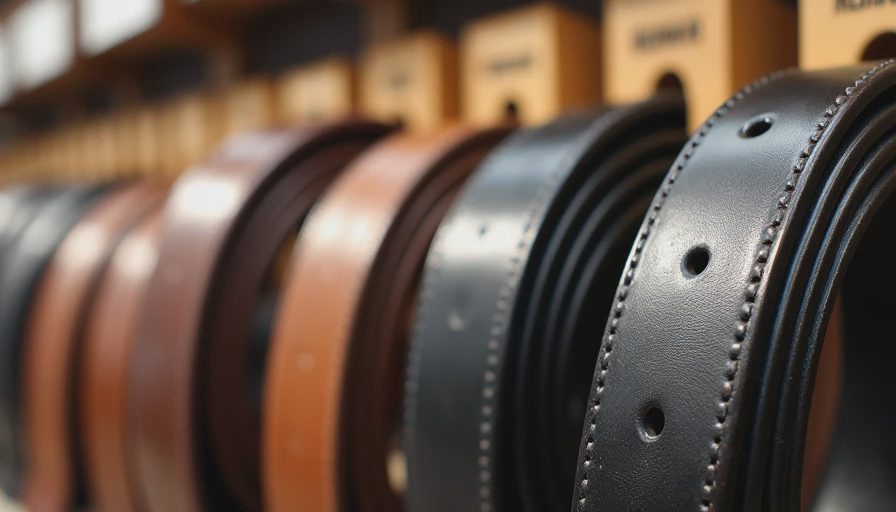
The Belt Trap Most Men Fall Into
You’re standing in the accessories section. You need a new belt. The $80 one looks nice. The $35 one next to it looks… pretty similar. So what’s the difference?
I’ve had this conversation hundreds of times. Most guys walk away either overpaying for marginal quality or buying junk that falls apart in six months.
Today I’m giving you the straight talk on leather belts based on thirty years of actually handling them.
Leather Grades Explained Simply
Here’s what those fancy terms really mean:
Full-Grain Leather
The very top layer of the hide. It includes all the natural grain, scars, and imperfections. This is the best stuff. It develops a beautiful patina over time, gets softer with wear, and lasts for decades if it’s well made. It’s also the most expensive.
Top-Grain Leather
The layer just below the full-grain after the very top has been sanded or corrected. Smoother and more uniform appearance. Still very good quality, but doesn’t age quite as beautifully as full-grain. This is what most decent $60–$90 belts are made from.
Genuine Leather
This is where things get tricky. “Genuine” sounds good but technically means anything made from real leather (as opposed to fake). It’s usually the lower layers that have been heavily processed, embossed, or corrected. Quality varies wildly. Many $30–$50 belts fall into this category.
What the Extra Money Usually Buys
The $80 belt often has:
Better quality leather (top-grain or full-grain)
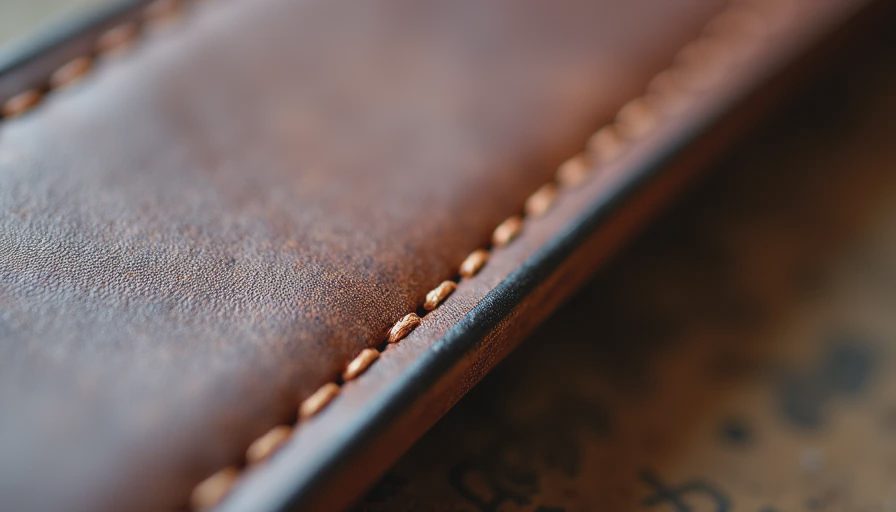
Stronger stitching
A better buckle (solid metal, not cheap plated plastic)
More careful edge finishing
Better dye that doesn’t rub off on your pants
The $35 belt might use thinner “genuine” leather, weaker construction, and a buckle that bends after a year.
But here’s the important part: sometimes the $35 belt is actually very close in quality to the $80 one, especially if it’s from a reputable brand’s lower line.
How to Tell Quality in the Store
Run your fingers along the belt:
Good leather feels substantial and has some natural texture.
Cheap leather feels thin, plasticky, or overly stiff.
Check the edges — well-made belts have clean, burnished or painted edges.
Look at the stitching — tight, even stitches are a good sign.
Test the buckle. It should feel solid and operate smoothly.
Flip it over. The back of a quality belt should feel like leather, not paper or weird fabric.
My Honest Buying Recommendation
For most men, here’s what I suggest:
Buy one really good dress belt in black and one in brown ($70–$100 range). These get heavy use and should last years.
For casual belts, the $35–$50 range is often perfectly fine.
When you find a belt that fits your waist perfectly and feels great, consider buying a backup.
I’ve seen men spend $120 on a “designer” belt that fell apart faster than a $45 one from the next rack. Brand names don’t always mean better construction.
Real Customer Stories
One guy insisted on the $95 “full-grain” belt. Six months later the buckle was loose and the edges were fraying. Turns out the construction was poor despite the leather grade.
Another customer bought the $38 belt on my recommendation. Three years later it still looks great. He comes back every time he needs something new.
The lesson? Construction and leather thickness often matter more than the marketing words on the tag.
Caring for Your Belts
A good belt will last longer if you:
Rotate between multiple belts instead of wearing the same one every day.
Let them rest after wearing (leather needs to breathe).
Condition them occasionally with proper leather conditioner.
Store them flat or hanging, not crumpled in a drawer.
The One Thing That Matters Most
Fit. A perfectly fitted $40 belt will always look better than an expensive one that’s too big or too small.
Measure your waist where you actually wear your pants (usually a couple inches above your hips). Don’t go by your pant size. Get the right length.
Final Advice Before You Buy
Next time you’re about to grab that $80 belt, slow down. Compare it honestly with the $35–$50 option next to it. Feel the leather. Check the construction. Ask yourself if the extra money is actually buying you something meaningful.
Often the middle option — a solid top-grain belt with good construction — gives you 90% of the quality for half the price.
Don’t overpay for hype. But don’t cheap out on something you’ll wear every day either.
Try it on with the pants you plan to wear it with. Walk around. Make sure it feels right.
That’s what the fitting room (or the mirror by the belt rack) is for.





No comments yet — grab the first one.