A loafer with horsebit is one of those shoes a man can wear for years without needing to rethink the rest of his closet. It works with gray trousers, chinos, a navy suit, and even dark jeans when the occasion is relaxed but not sloppy. I watched men buy this shoe on the men's floor for three decades, usually after they had tried something too plain or too shiny. The right pair looks settled, not showy. The wrong pair looks like it came with a costume.
The metal bar across the vamp is the identifying detail. It gives a slip-on more presence than a basic penny loafer, but it does not require the owner to explain what he is wearing. That matters. Most men want a shoe that does its job and lets them get to dinner, the office, or their daughter's graduation without a lecture in the mirror.
What the horsebit detail actually changes
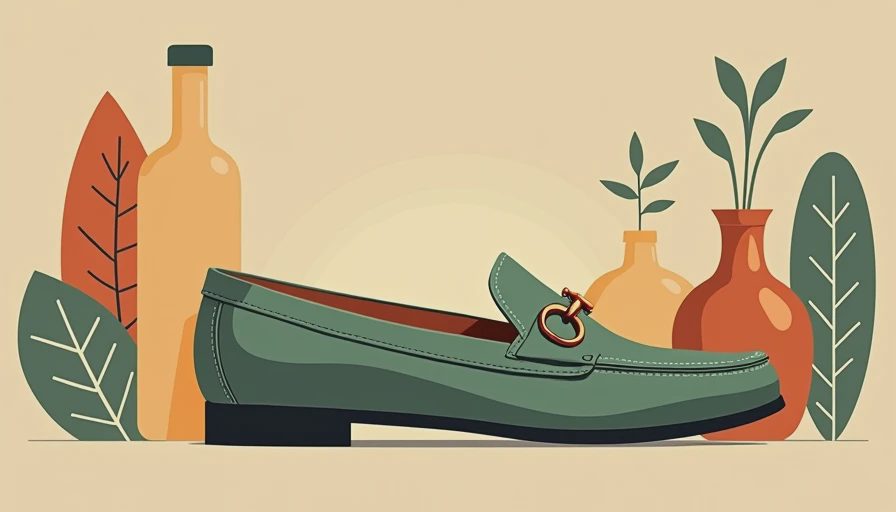
A loafer with horsebit has more visual weight across the top of the foot than a plain loafer. That makes it useful with medium- and heavy-weight trousers, especially wool pants with a clean crease. If you wear lightweight summer chinos most of the year, a narrow, low-profile version will look more balanced than a thick rubber-soled model.
The metal should sit flat and look securely attached. On inexpensive pairs, the bar can appear bright, loose, or oversized. That is usually the first thing people notice, even if they cannot identify the problem. A muted gold, brushed brass, or subdued silver finish is easier to wear than mirror-polished hardware. You are buying a shoe, not a door handle.
I also look at the vamp. It should cover enough of the foot to hold the shoe in place without cutting across the base of the toes. A low vamp often feels attractive in the box and unstable after ten minutes of walking. Try it on. That's what the fitting room is for.
Leather, sole, and construction
For a first loafer with horsebit, smooth calfskin or corrected-grain leather is the sensible starting point. Smooth leather is easy to wipe clean and looks appropriate in an office. Suede is comfortable and handsome, but it asks more from you during wet St. Louis springs and muddy parking lots. If you already own a dependable leather pair, suede can be the second pair rather than the only pair.
Look at the sole before you look at the label. A leather sole is neat and relatively quiet indoors, though it can slide on polished floors when new. A rubber sole offers better traction and usually handles daily commuting better. Some manufacturers use a thin rubber insert with a leather forepart, which gives you a dressier appearance without making the shoe helpless in rain.
At department-store prices, a reasonable range is about $80 to $180 for a well-made everyday pair. Around $200 to $350, you may find better leather, stronger heel construction, and more repairable soles. Price alone does not guarantee comfort. I have handled $300 shoes that pinched at the little toe and $110 shoes that men came back to buy in another color.
Getting the fit right
A loafer with horsebit should feel secure over the instep before the leather softens. Do not solve a loose heel by buying a smaller size if your toes are already touching the front. That creates a short, painful shoe and does nothing for the heel. A modest amount of heel movement is normal during the first few steps, but your foot should not lift completely out of the shoe.
Wear the socks you normally use. Dress socks can make a half-size difference compared with thick athletic socks. Try both shoes late in the day, when feet have expanded slightly. Walk on a hard surface, bend your knees, and stand still for a minute. Check whether the metal bar presses on the top of your foot. If it does in the store, it will not become a pleasant surprise at a wedding.
Length is only half the measurement. Width matters just as much. Many men who complain that loafers never fit are wearing a standard D width when they need a wide size. Brands such as Allen Edmonds often provide more width options, while Cole Haan, Clarks, Johnston and Murphy, and Florsheim commonly offer accessible department-store choices. The actual last differs by model, so try the pair rather than trusting a familiar size.
Where to wear one without overthinking it
A loafer with horsebit works best when the rest of the outfit is straightforward. Wear it with charcoal trousers and a light blue shirt for the office, or with navy chinos and a textured sport coat for dinner. Brown leather is flexible with blue, tan, olive, and medium gray. Black is sharper and more formal, especially with charcoal trousers or a suit.
For a wedding, choose a polished leather pair with a restrained metal finish. For a funeral or serious business meeting, black is the safer choice, and a plain cap-toe Oxford is even more conservative. This slip-on is not wrong in every formal setting, but it does announce itself more than a lace-up. Clothes have a volume setting; the shoe should match the room.
With jeans, keep the denim dark and clean, with little or no distressing. A medium-brown shoe can work well, but avoid a very glossy finish. The combination should look deliberate, not as though you left the house in office clothes and changed only your pants.
Common mistakes I saw on the sales floor
The first mistake is buying hardware that is too large. Men sometimes choose the most noticeable pair because it looks impressive under store lighting. Outside, that bar can dominate the whole outfit. The second mistake is choosing a pointed toe. A gentle almond shape gives your foot room and looks current for longer than a sharp, narrow front.
Another problem is ignoring the heel. A worn-down heel changes how you stand and can make an otherwise good shoe look tired. A cobbler can often replace a heel for roughly $40 to $80, depending on materials and local labor. That is cheaper than replacing a comfortable upper because the heel was allowed to collapse.
Finally, do not wear the same pair seven days a week. Give leather at least a day to dry between wears, use a cedar shoe tree if you have one, and brush away dust before it settles into the creases. The small habits are what separate a two-year shoe from a six-year shoe.
How to buy the pair you will actually wear
Start with the occasions you have on the calendar, not an imaginary wardrobe. If you go to the office three days a week and attend two or three dressier events each year, brown leather with a rubber sole will probably earn the most use. If you wear suits regularly, black leather with a thinner sole is the more useful purchase.
Compare the same size in two or three brands. Notice whether the heel slips, whether the bar presses, and whether the sole bends near the ball of your foot. Check the return policy before wearing the shoes outdoors. A short walk on carpet tells you little; pavement tells you whether the cushioning and grip are right.
A loafer with horsebit is a practical upgrade when the fit is sound and the finish is restrained. You do not need a famous label or a closet full of pairs. Buy one that holds your heel, gives your toes room, and matches the trousers already hanging in your closet. Then wear it often enough to earn the purchase.




No comments yet — grab the first one.