A mens business shirt size chart is useful, but it is not a magic translator between every shirt brand in America. After 30 years on a department store men's floor, I can tell you that a 16-inch neck does not guarantee the same fit at every rack. Collar shape, sleeve cut, chest room, and the difference between slim and classic fit all matter. The good news is that you only need a few measurements and a little common sense to get close before ordering.
Most men begin with their neck size and sleeve length. That is the right place to start, but do not stop there. A business shirt needs to close comfortably at the collar, reach the wrist bone, and lie smoothly across the upper back. If one of those three areas is wrong, the shirt will spend more time on a hanger than on your back.
How to read a mens business shirt size chart
A typical chart lists neck sizes from about 14 to 18 inches, usually in half-inch steps. Sleeve lengths commonly run from 32 to 37 inches. Some shirts are sold as a combined size, such as 16-34, while others use S, M, L, and XL. The combined measurement is more useful for a business shirt because it tells you how the collar and sleeves were cut.
Here is a practical starting range. A 15-inch neck often corresponds to a medium shirt, a 16-inch neck to a large, and a 17-inch neck to an extra-large. Those letter sizes are only rough guides. One brand's large can fit like another brand's medium or extra-large, especially when comparing slim fit with classic fit.
Chest measurements help settle the argument. Measure around the fullest part of your chest while wearing a thin undershirt, keeping the tape level under your arms. A 40-inch chest generally needs a shirt with more than 40 inches of actual garment room. You need space to reach forward, sit down, and tuck the shirt without pulling the buttons open.
A shirt labeled 16-34 means a 16-inch neck and a 34-inch sleeve, not a 16-inch chest. That distinction saves a surprising number of returns. I have watched men bring back perfectly good shirts because they read the first number as the chest measurement.

Measure yourself in five quiet minutes
You can measure yourself with a cloth tape, or measure a shirt that already fits. For your neck, place the tape where the collar normally rests and leave enough room for one finger. You should be able to button the top button without feeling as if the shirt is arguing with you. If you wear a tie, that extra finger of room matters even more.
For sleeve length, bend your arm slightly and measure from the center back of your neck, across your shoulder, down the outside of your arm, and to the wrist bone. Do not let your arm hang stiffly at your side. That method often produces a sleeve that is too short when you reach for a steering wheel or a conference table.
To measure an existing shirt, button it and lay it flat. Measure the collar from the center of the button to the far end of the buttonhole. Measure the sleeve from the center back seam to the cuff edge. Then measure the chest from armpit to armpit and double that number. This is often more reliable than remembering a letter size from memory.
If your measurements fall between sizes, decide where you need room. A larger collar can sometimes be corrected with a tailor, but a tight chest is harder to rescue. Sleeve cuffs can be adjusted modestly, while adding meaningful width through the shoulders is usually not worth the expense on a mid-priced shirt.
Slim, tailored, and classic fit are not the same thing
The mens business shirt size chart tells you the body measurements a shirt is intended to accommodate. The fit label tells you how much fabric was left around those measurements. Slim fit usually has a narrower torso and smaller armholes. Tailored fit sits between slim and classic. Classic fit gives more room through the chest, stomach, and lower back.
A man with a 16-inch neck and a 42-inch chest may need a classic-fit 16-34 even if a tailored 16-34 closes at the collar. The tailored version can feel fine while standing and pull across the buttons when seated. That is not a minor annoyance; it is the reason many shirts come home from the store and never leave the closet.
On the other hand, a man with a 39-inch chest may find classic fit too loose through the waist. The collar can be correct while the shirt balloons underneath a jacket. In that case, tailored fit is often the sensible middle ground. Slim fit is best treated as a cut, not a badge of honor. If the back yoke strains, it is the wrong cut.
At stores such as Macy's, Kohl's, and Dillard's, you will usually find multiple cuts under the same brand name. Read the tag, not just the number. Brands such as Van Heusen and Calvin Klein commonly offer more than one fit category, and dress shirt lines from Brooks Brothers or Charles Tyrwhitt can use their own sizing language. Put the label aside and compare measurements.
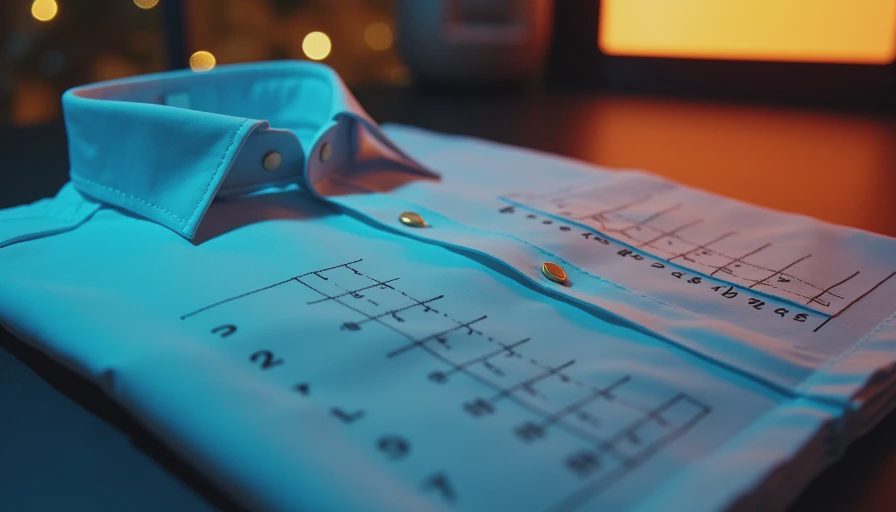
Collar and sleeve checks that prevent a bad purchase
Stand normally and button the collar. You want a small amount of breathing room, not a visible gap and not a strangled neck. With a tie on, the collar points should stay in place under the knot. If the collar feels right only when you tilt your head forward, it is too tight.
Next, check the sleeve cuff. It should reach the wrist bone and show a small amount beyond a jacket sleeve. When your arms hang naturally, the cuff should not cover your hand. When you bend your elbow, it should not climb halfway up your forearm. A sleeve that is one inch short looks worse than a body that is slightly roomy.
Finally, sit down. The buttons should remain flat, the shirt should stay tucked, and the back should not pull across the shoulder blades. Reach forward as if you were taking a folder from a shelf. A business shirt is work clothing, not a cardboard display. It has to move.
Buying online without guessing twice
When shopping online, find the retailer's own chart rather than relying on a general search result. Record your neck, sleeve, and chest numbers in your phone. Then compare those numbers with the garment measurements if they are provided. Product measurements and body measurements are not interchangeable, so read the heading carefully.
Look for the fit description, fabric composition, and return window. A 100 percent cotton shirt can shrink slightly if washed hot, while a cotton blend may hold its measurements more consistently. Non-iron treatments can feel smoother and resist wrinkles, but they do not change the need for a proper collar and sleeve fit.
Order one shirt before ordering four. Try it on over the undershirt you normally wear, with the shirt tucked and untucked. If the collar and shoulders work but the waist has excess fabric, a tailor may charge roughly $15 to $30 for simple side adjustments, depending on the shop. That can be money well spent on a shirt you will wear weekly.
A simple fitting-room decision
Bring your usual belt and, if possible, the jacket you plan to wear. Start with the mens business shirt size chart, then test the actual shirt. Check the neck, sleeves, shoulders, chest, and tuck in that order. If the collar is right but the sleeve is short, try the next sleeve length before changing the neck size. If the stomach is tight but the collar works, try a roomier fit rather than a larger collar.
I once helped a customer who had been buying 17-35 shirts for years because he assumed the larger collar solved every problem. His neck was right, but the sleeves covered his knuckles and the body looked like a borrowed tent. A 16-34 classic-fit shirt gave him a better collar, cleaner sleeves, and enough room through the middle. He bought two colors and stopped returning shirts.
That is the useful lesson behind any mens business shirt size chart: use it to narrow the choices, then judge the garment on your body. Measurements get you to the fitting room. Movement and comfort tell you whether you found the right shirt. Try it on. That's what the fitting room is for.
Before placing an order, write down your best neck and sleeve combination, note whether classic or tailored fit works better, and save the retailer's return policy. The next purchase becomes much easier, and you will spend less time folding shirts back into a box.




No comments yet — grab the first one.