Most men do not need a closet full of jackets. They need one that fits properly and works for weddings, interviews, funerals, dinners, and the occasional office meeting. After 30 years on a department-store men's floor, I can tell you that proper suit jacket fit is less mysterious than the internet makes it sound. It comes down to a handful of visible checks, and you can make most of them while standing in a fitting room.
The first mistake is buying the size printed on an old jacket. Bodies change, manufacturers cut garments differently, and a jacket that fit in 2016 might not fit now. Bring the shirt you expect to wear underneath, put both arms through the sleeves, and look at the jacket from the front, side, and back. Try it on. That's what the fitting room is for.
Start With the Shoulders
The shoulders are the part that matters most because they are difficult and expensive to alter. Stand naturally with your arms at your sides. The jacket's shoulder seam should sit where your shoulder ends, not halfway down your upper arm and not several inches inward. If the seam extends past the shoulder, the jacket is too large. You will see a shelf or a wrinkle near the upper sleeve, and no amount of waist tailoring will fully correct it.
For proper suit jacket fit, the shoulder line should look clean while you are standing and when you move your arms. A small amount of padding is normal; a bulky ridge is not. Ask a companion to look at the back seam, since you cannot judge that angle well yourself. A jacket that fits the shoulders but is a little loose through the middle can be adjusted. A jacket with oversized shoulders usually belongs back on the rack.
A customer once came in for a job interview wearing a jacket two sizes too big. He thought the extra room looked professional. It actually made his head appear small and left folds under both arms. I put him in a smaller jacket, and the sleeves suddenly looked intentional. He spent less than $30 on a basic sleeve alteration and walked out looking like he had slept properly for a week.
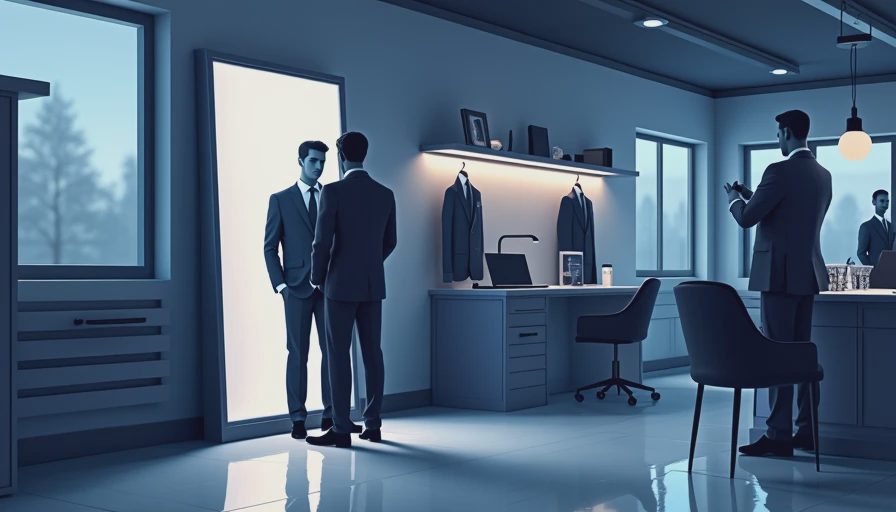
Check the Chest, Button, and Lapels
Button the jacket while standing normally. The front should close without pulling into a sharp X around the button. A slight, smooth tension is acceptable, especially in a structured wool jacket, but a button straining against the fabric tells you the chest or stomach needs more room. Do not solve that problem by leaving the jacket open. That only hides the evidence until you sit down.
The lapels should lie flat against your chest. If they bow outward, the jacket is too tight across the chest or the button position does not suit your shape. If the front hangs away and creates a large gap, the jacket may be too loose or cut incorrectly for you. A tailor can sometimes let out a small amount, often around half an inch to an inch, depending on the available fabric. He cannot create a new chest size from nothing.
Proper suit jacket fit also means the jacket stays comfortable when you sit. Button it before sitting, then unbutton it once you are seated. You should be able to cross your arms briefly without feeling trapped, but you should not expect a suit jacket to behave like a sweatshirt. If the sleeves twist badly or the back pulls into horizontal wrinkles, try a different size or cut before paying for alterations.
Jacket Length and Sleeve Length
A traditional jacket should cover your seat and end around the middle of your hand when your arms hang naturally. This is not a rule requiring you to measure yourself with a ruler. Look for balance. A jacket ending high on the hip can make a man's torso look short, while an overly long jacket can look borrowed. Modern cuts are sometimes shorter, but short is not automatically better.
Sleeve length is easier to judge with a shirt on. About one-quarter to one-half inch of shirt cuff should show beyond the jacket sleeve when your arms rest at your sides. If no cuff shows, the jacket may have sleeves that are too long. If a full inch or more is visible, the sleeve may be too short. Sleeve length is one of the most useful alterations because it is commonly adjusted for roughly $20 to $45, depending on buttons and working buttonholes.
The jacket hem should stay level when you walk. If it kicks upward in back, the jacket may be too tight across the seat or your posture may require a different cut. Proper suit jacket fit is not just a front-view concern; a jacket that looks good in a mirror but bunches across the back will become annoying before the event is over.

What to Look For in the Fitting Room
Wear the shoes you expect to wear with the suit, or bring a similar pair. Shoes change how you stand, and posture changes how the jacket hangs. Put your phone, wallet, and keys in your usual pockets. A jacket that fits only when you stand stiffly with empty pockets is not much use in real life.
Turn sideways and inspect the collar. The jacket collar should sit close to the shirt collar without a large gap or a roll of fabric behind your neck. A small collar gap can result from posture, shoulder shape, or an imperfect size. Try another jacket before assuming a tailor can fix it. Also examine the armholes. You need enough room to move naturally, but excessive cloth under the arms usually indicates a jacket that is too large.
Raise your arms halfway, reach for a coat hook, and sit down. These movements reveal more than posing in front of the mirror. The jacket may feel snug across the upper back when you reach, but it should not pull the front button loose. If you are between sizes, a tailor can often improve a slightly roomy jacket. He has fewer good options when the garment is already tight.
Alterations Worth Paying For
The best ready-to-wear jacket is often the one that needs two small changes, not the one that fits perfectly in every place straight off the rack. Sleeve length, waist suppression, and trouser hemming are ordinary alterations. Tapering the sleeves can help, but it should not make the cuff so narrow that your hand cannot pass through comfortably.
Waist adjustment commonly costs around $25 to $60. Sleeve work can cost $20 to $75, particularly when the buttons are functional. Shortening a jacket is a more serious job, often $50 to $100 or more, because the pockets and button placement can become unbalanced. Shoulder work is usually the least attractive expense. If the shoulders are wrong, keep looking.
Ask the store whether alterations are included, what the turnaround time is, and whether the jacket can be returned after tailoring. Department stores such as Macy's, Dillard's, and Nordstrom commonly offer alteration services, while many independent tailors will inspect the garment before quoting a price. Proper suit jacket fit starts with the garment itself; tailoring is the final adjustment, not a rescue operation.
A Practical Final Check
Before buying, compare the jacket with the shirt and shoes you will actually use. Check the shoulders first, then button tension, lapels, collar, sleeve length, jacket length, and movement. Take a quick photograph from the side if you are shopping alone. Mirrors can be misleading, particularly under bright fitting-room lights.
If the jacket passes those checks, examine the fabric and construction. A medium-weight wool around 9 to 12 ounces is versatile for much of the year, while a lighter blend can be easier in warm weather. Look at the lining, pocket alignment, and button attachment. You do not need a luxury label to get a dependable suit. A well-cut mid-priced jacket with the right alterations will outperform an expensive jacket in the wrong size every time.
When you return home, wear it for ten minutes with the shirt, belt, and shoes you intend to use. Sit at the dining table and walk across the room. That last test catches problems a store mirror misses. Proper suit jacket fit should feel secure through the shoulders, clean through the chest, and comfortable enough that you stop thinking about the jacket. That is the whole point: you look prepared, not dressed up for inspection.

No comments yet — grab the first one.