Business Casual Men: The No-Nonsense Guide to Dressing for Work
Business casual men have a problem: nobody ever explains what business casual actually is. After 30 years running the men's floor at a St. Louis department store, I've seen a thousand guys stand in the aisle with a suit coat in one hand and a polo in the other, asking if either one works. The short answer is maybe. The longer answer is what this guide is for. You don't need to become a different person to dress right for the office. You need a handful of shirts, a pair of chinos, a good belt, and shoes that don't embarrass you when you walk into a meeting.
I'm not a designer. I don't chase trends. I'm the guy who has handed a dress shirt to roughly 50,000 men and seen what comes back to the return counter. So trust the process.
What Business Casual Men Actually Need
For most offices, business casual men can get away with a short list: two or three button-front shirts, one or two pairs of chinos, a leather belt, and shoes that can be resoled. That's it. You don't need a suit, unless the invitation says suit. You don't need a tie, unless your boss wears one daily. You need clothes that fit at the shoulders and the waist, and that's where most guys go wrong. Sleeves that hit at the wrist bone, a collar that lies flat, and trousers that break once at the front of your shoe. Get those three things right and you're in the top ten percent of American offices.

Start With the Right Shirt
A customer came in a few years ago, before his daughter's college interview. He was wearing a short-sleeve dress shirt with a clip-on tie, and he asked if it was okay. I pointed at the fitting room. Try it on. That's what the fitting room is for. He came back out and looked at himself in the mirror and laughed. Then I handed him a long-sleeve pinpoint Oxford, a 100 percent cotton shirt that runs about $45 to $60 at Macy's or Kohl's when it's on sale. That's the answer for nearly every business casual situation: a crisp, long-sleeve button-down in white, light blue, or a subtle stripe. Skip the short sleeves. Short sleeves make you look like you're about to sell used cars, and they always bunch up under a jacket.
The Chino Is the Backbone
If I had a dollar for every pair of Dockers or Haggar chinos I've sold to a guy who said he didn't like dress pants, I'd be retired twice. Chinos are the middle ground that actually works. They are not jeans, and they are not wool trousers. They are cotton pants with a clean crease, and they go with almost anything you already own. For business casual, buy a pair in khaki, navy, or gray. A slim-straight cut is fine for most men; don't chase a skinny fit unless you're built like a college track star. The waist should sit where your jeans sit, and the length should break once on the top of your shoe. If you're between sizes, take the bigger one. You can always take in the waist, but you can't let out a pair that's too tight across the thighs.

Business Casual Men and the Jacket Question
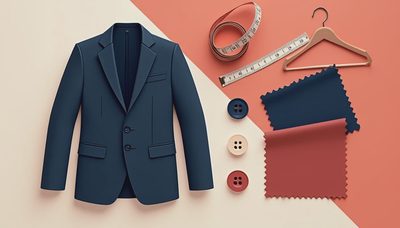
Business casual men don't have to wear a jacket, but a jacket changes how everyone treats you. I've watched the same guy walk into a meeting in a polo and chinos and get ignored, then come back after lunch in a navy blazer and get called 'sir.' It's not fair, but it's real. You don't need a tailored suit for this. A navy blazer in a cotton or a soft wool, around $100 to $150 at Dillard's or on sale at Macy's, covers every office event from a client lunch to a promotion announcement. The key is the shoulder: the seam should sit right at the edge of your shoulder bone, not hanging off, not pinching. If you're between jacket sizes, try the next one up and have the sleeves shortened. That's the one alteration worth paying for.
Shoes, Belt, and the Details
Shoes are where business casual men reveal themselves. A pair of brown leather loafers or derbies will do more for you than any shirt. You can find a decent pair of Clarks or Cole Haan for $80 to $120, and they'll last years if you rotate them with another pair. Black shoes are fine with gray pants or navy pants, but brown is more forgiving with khakis. Match your belt to your shoes. It doesn't need to be the same brand or even the same shade, but it should be the same color family. A cheap belt with a scratched-up buckle will undo everything else. And for the love of all that's holy, wear navy or charcoal socks, not white athletic socks, with your loafers.
What to Buy First
Business casual men who own the basics I just described will be ready for almost anything. Here's the shopping order: two shirts, two pairs of chinos, one navy blazer, one pair of brown leather shoes, and a belt that doesn't sag. Try everything on before you buy. Stand in front of the mirror, sit down in the pants, raise your arms in the jacket. If it pulls or pinches, it's wrong, no matter what the tag says. You can put this whole wardrobe together for $300 to $400 if you work the sales at Macy's, Kohl's, or Dillard's. That's less than most men spend on one fancy suit they wear twice. Dress like a grown-up who owns his closet, and you won't have to think about it again until the seasons change.



No comments yet — grab the first one.