Business shirts mens shoppers usually want one thing: a shirt that looks appropriate at work, feels comfortable through a full day, and does not turn into a wrinkled rag by lunchtime. I spent 30 years on a department store men's floor, and I can tell you that most shirt mistakes come down to fit, fabric, or buying the wrong size because the tag looked familiar.
A good office shirt does not need a designer label or a $150 price tag. A well-made shirt from Macy's, Kohl's, Dillard's, or a comparable store can serve you for years if the collar sits correctly, the sleeves reach your wrist bone, and the body does not billow around your waist. Start there before worrying about patterns or brand names.
What to look for in business shirts mens buyers can wear all day
Cotton remains the safest starting point. Look for a fabric that feels substantial without feeling heavy. A lightweight cotton shirt works well in a warm office, while an oxford weave or cotton blend can hold its shape better during travel. If the label lists an easy-care finish, expect less ironing, but do not assume “wrinkle-free” means completely maintenance-free. Most shirts still look better after five minutes with an iron or steamer.
For regular office wear, white and light blue do the most work. A pale gray, soft pink, or restrained stripe can expand the rotation without making your closet complicated. If your workplace is conservative, choose a solid shirt for presentations and interviews. A blue-and-white stripe is useful for ordinary office days, especially under a navy blazer or charcoal sport coat.
Check the stitching at the side seams and around the collar. Loose threads are not a minor detail; they often become a split seam after repeated washing. At the register, I would rather see a customer buy three solid shirts with dependable construction than spend the same money on one loud shirt he will wear twice.

Get the fit right before judging the shirt
The collar should touch your neck without choking you. You ought to fit one or two fingers between your neck and the collar, not a whole hand. A collar that gaps when you button it is too large, while a collar that leaves red marks after an hour is too small. Business shirts mens customers often return are not defective; they simply were never tried on with the top button closed.
The shoulder seam should end close to the point where your shoulder drops into your arm. If it hangs halfway down your upper arm, the shirt is too large. If it sits on top of your shoulder and pulls across your back, it is too small. No tailor can make a badly wrong shoulder look right for a reasonable price.
Sleeves should reach the wrist bone when your arms hang naturally. When you bend your arm, a little fabric should remain so the cuff does not climb halfway up your forearm. A proper cuff closes around the wrist without sliding over your hand. If you wear a jacket, roughly half an inch of cuff showing is a dependable starting point.
The chest and waist deserve equal attention. You need enough room to sit, reach, and drive, but not so much that the buttons pull or the shirt balloons behind you. Try it on while seated if the store allows it. A shirt that looks fine standing in front of a mirror can feel completely different at a desk.
Choosing collars, cuffs, and shirt details
A point collar works well under a tie and tends to suit men with a rounder or fuller face. A spread collar gives more room between the points and looks balanced with a larger knot or an open top button. The button-down collar is less formal but practical for business-casual offices. It stays in place and does not require much attention during the day.
French cuffs are usually more trouble than they are worth for ordinary office wear. Barrel cuffs with one or two buttons are easier to live with, easier to launder, and appropriate for nearly every workplace. If you rarely wear a tie, choose a collar that stands neatly open rather than one designed only to be worn under a knot.
Pocket details matter less than fit, but a clean chest with no pocket often looks neater beneath a jacket. A pocket is useful if you carry a pen, though stuffing it full of receipts will pull the shirt forward. Business shirts mens buyers choose for interviews should have restrained details, matching buttons, and a collar that looks composed without a tie.
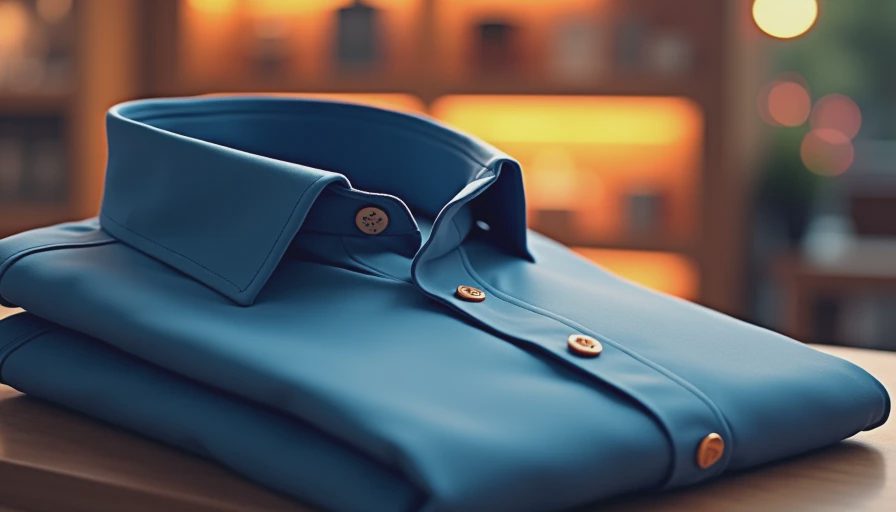
How much should you spend?
You can find serviceable office shirts around $25 to $45 during regular department store promotions. In the $50 to $80 range, you often get better fabric, stronger collars, and more consistent sizing. Spending above $100 can make sense if the shirt fits unusually well or if you need a particular cut, but a higher price does not automatically mean better construction.
Watch for department store sales around seasonal changes. A $60 shirt marked down to $35 is common, and buying two or three compatible colors during one sale can simplify the workweek. Keep the receipt until the first wash. Shrinkage, color bleeding, or a collar that twists after laundering is information you need before removing the tags from every shirt.
When comparing business shirts mens options, calculate cost per wear rather than staring at the ticket. A $35 shirt worn twice a month for two years has served you better than a $90 shirt that feels wrong and stays on a hanger. The cheapest shirt is not always the least expensive choice.
Washing and storing shirts so they last
Read the care label, then use cold or warm water rather than the hottest setting. Remove shirts promptly from the washer and hang them while damp. Smooth the collar, placket, and cuffs with your hands before drying. That small step reduces ironing and keeps the shirt from developing hard wrinkles.
Do not leave a shirt crumpled in a gym bag overnight. Sweat and deodorant can discolor the underarms, especially on white cotton. Rotate your shirts instead of wearing the same two every week. Fabric needs time to recover, and collars last longer when they are not constantly folded under pressure.
If you use starch, keep it light. Heavy starch can make fabric brittle and uncomfortable around the collar. A steamer works well for morning touch-ups, but an iron still gives the sharpest result along the placket and cuffs. Hang clean shirts with enough space between them that the sleeves do not become crushed.
A simple buying plan for the workweek
Start with two white shirts, two light blue shirts, and one subtle stripe. That gives you five dependable choices without making laundry a daily emergency. Add a pale gray or muted pink shirt if it works with your trousers and jackets. Business shirts mens wardrobes should be built around combinations you will actually wear, not colors that looked interesting under bright store lighting.
Before paying, button the collar, raise both arms, sit down, and look at the back in a mirror. Check whether the buttons pull, the cuffs reach your wrists, and the shirt stays tucked when you move. If the store has a fitting room, use it. Try it on. That's what the fitting room is for.
The right shirt is the one you stop noticing after you put it on. It lets you work, drive, present, and get through dinner without tugging at the collar. When business shirts mens shoppers focus on fit, fabric, and useful colors first, buying clothes becomes a short errand instead of a recurring problem.



No comments yet — grab the first one.