A scarf with suit is one of those combinations men often make harder than it needs to be. You are trying to stay warm without looking like you grabbed the first thing hanging by the front door. After 30 years on a men's department floor in St. Louis, I can tell you the answer usually comes down to three things: fabric, color, and how much of the scarf you actually show.
A scarf should support the suit, not compete with it. For a navy suit, a gray, burgundy, camel, or dark green scarf is easy to live with. With a charcoal suit, try medium gray, navy, rust, or a muted blue. Black works, but it can look severe unless the rest of your clothes are equally simple. You do not need a designer label or a scarf wide enough to double as a picnic blanket.
Start with the fabric and weight
Wool is the dependable choice for a scarf with suit because it provides warmth without requiring much bulk. A medium-weight wool scarf, roughly 8 to 12 inches wide, sits neatly under a jacket lapel. Merino wool feels smoother against the neck than many rougher winter weaves, while cashmere is softer but usually costs more and needs gentler handling. A good wool blend in the $25 to $60 range often gives a practical balance of warmth, appearance, and durability.
Cotton can work for fall or a lightly heated commute, but thin cotton usually does not hold its shape as well in serious winter weather. Acrylic is inexpensive and easy to wash, although some acrylic scarves develop a fuzzy surface after repeated wear. If you are buying one scarf for office travel, church, dinners, and outdoor errands, I would start with wool or a wool blend rather than chasing the softest label on the rack.
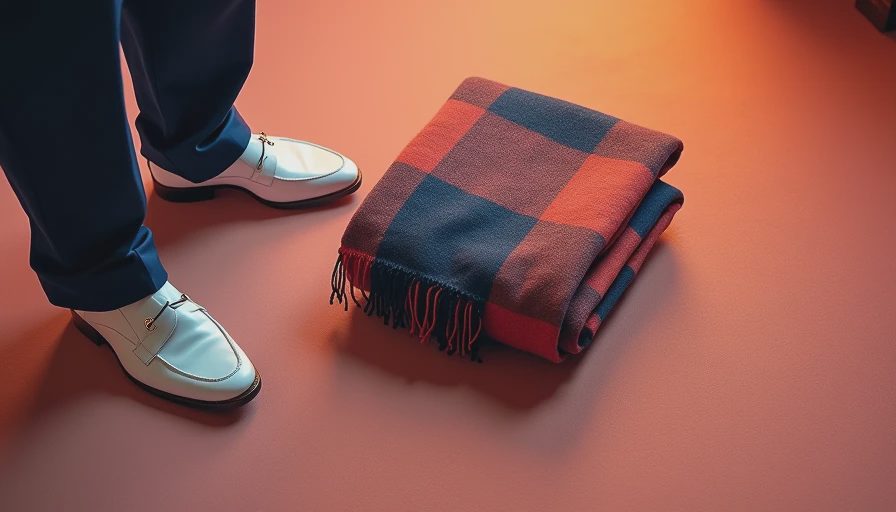
Pay attention to the ends. Fringe is fine when it is short and even. Long fringe can look untidy against a tailored jacket, particularly when you are also wearing a tie. A scarf with suit should have enough substance to fold cleanly but not so much that the lapels disappear beneath it.
Match the scarf to the suit
The safest approach is contrast without shouting. A navy suit and charcoal scarf look clean because the colors are close but not identical. A charcoal suit with a burgundy scarf adds color while staying appropriate for an office or evening event. Brown suits, tan topcoats, and tweed jackets generally welcome camel, olive, cream, or dark rust.
Patterns require a little restraint. A windowpane or subtle stripe can add interest to a solid suit, but the scarf should not repeat every detail in your shirt and tie. If your tie has a pattern, a solid scarf is usually the easier answer. If your tie is solid, a restrained plaid or herringbone scarf can work. The word restrained matters here. If the scarf is the first thing a person notices from across the parking lot, it is doing too much.
For a scarf with suit at a wedding, funeral, interview, or formal business meeting, stay with solid colors and quiet textures. Save the bright novelty print for a casual coat. There is no prize for making winter accessories the center of the conversation.
Three ways to wear it without fuss
The simplest method is the drape. Place the scarf around your neck and let both ends fall evenly over the front of your suit. This adds little bulk and works well indoors when you may remove your coat but keep the scarf for a short walk. It is also the least likely method to disturb a tie.
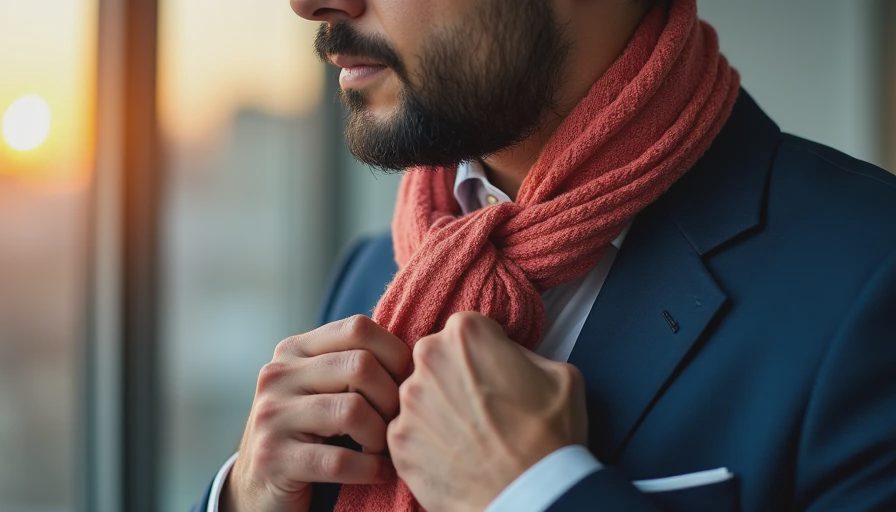
For more warmth, fold the scarf in half, place the folded end at one side of your neck, and pull the loose ends through the fold. This is often called a European loop. It stays in place and looks tidy under a topcoat. Do not pull it so tightly that your collar bunches upward. You want warmth, not the appearance of being slowly packed for shipping.
The overhand wrap is another useful option. Put the scarf around your neck with one end slightly longer, cross the longer end over the shorter end, and bring it behind and through the opening. Keep the knot low. A bulky knot at the throat can make even a well-fitted suit look crowded.
Fit the whole outfit, not just the accessory
A scarf cannot rescue a jacket that is too large in the shoulders. I have watched men spend fifteen minutes choosing a scarf while the shoulder seam on their new suit sat nearly two inches past the shoulder bone. The scarf was not the problem. The jacket was. The top of the sleeve should begin where your shoulder ends, and the collar should rest against your shirt collar without a gap.
The scarf should also leave room for your shirt collar and tie. If the material pushes your tie sideways, use a thinner scarf or a looser wrap. If the scarf slides under the collar and creates wrinkles, try folding it once lengthwise before putting it on. A scarf with suit should make the outfit look finished, not make you keep touching your neck every thirty seconds.
Check the combination in a mirror while standing naturally. Sit down, turn your head, and put on the coat you actually plan to wear. A scarf that looks fine over a shirt may become too thick under a wool overcoat. Try it on. That's what the fitting room is for.
What to buy at a department store
At Macy's, Kohl's, Dillard's, or a similar department store, begin by looking at the fiber label rather than the display sign. A wool blend with a little nylon can be perfectly serviceable for regular commuting. A 100 percent wool scarf may feel warmer and hold its shape better, but the construction matters just as much as the percentage. Run your hand over the fabric. Look for a consistent weave, straight edges, and stitching that does not pull when you gently stretch the scarf.
For most men, one neutral scarf and one darker color cover nearly every useful situation. A charcoal scarf handles navy, black, gray, and many brown coats. A burgundy or dark green scarf gives a second option without forcing you to rebuild your wardrobe. Expect to spend about $30 to $75 for a dependable everyday piece, with higher prices making sense only when the fabric and finish are genuinely better.
Avoid buying a scarf solely because it feels exceptionally soft under bright store lights. Some low-cost materials feel pleasant for five minutes and become irritating after a full hour. Wear your normal coat to the store if possible. The scarf needs to work with the collar opening, not just look attractive folded on a table.
Common mistakes worth avoiding
The most common mistake with a scarf with suit is choosing too much volume. Thick cable knits and oversized blanket scarves belong with casual outerwear, not most tailored jackets. Another mistake is matching the scarf exactly to the tie. Identical colors can look forced, especially when the textures are different. Similar family of colors is enough.
Men also tend to forget maintenance. Follow the care label, let wool air out between wears, and avoid hanging a heavy scarf from a narrow hook that stretches it. Fold it in a drawer or place it over a broad hanger. If it gets wet, dry it flat away from direct heat. A radiator can shrink or distort wool faster than you would expect.
Finally, do not let the accessory make you uncomfortable. If you keep loosening it, choose a shorter or lighter model. The best scarf with suit is the one that keeps you warm, stays put, and disappears into the outfit after you leave the house. That is the whole job. Pick a sensible color, check the fabric, and walk out the door.


No comments yet — grab the first one.