The average shoulder width for men is useful only as a starting point. It can help you understand whether a shirt or jacket is cut close to your build, but it will not tell you what size to buy by itself. I learned that after 30 years on a department store men's floor, where I watched thousands of men pick a jacket by chest size and then wonder why the shoulders looked borrowed.
Most adult men's shoulder measurements fall somewhere around 16 to 20 inches when measured from the prominent shoulder point on one side to the same point on the other. That is a broad working range, not a rule carved into a fitting-room mirror. Height, muscle, age, posture, and body shape all affect the number. Two men with a 42-inch chest can need noticeably different shoulder widths.
What average shoulder width for men really tells you
Shoulder width is the distance across your upper back, usually measured from the bony point at the end of one shoulder to the matching point on the other. Clothing companies do not always publish this measurement consistently. One brand might list garment shoulder width, while another lists body measurements or simply gives you a chest size. That is why a medium in one store can fit like a small or large somewhere else.
A rough guide is helpful. Men around 5 feet 6 inches to 5 feet 9 inches often measure near 16 to 18 inches. Men around 5 feet 10 inches to 6 feet 2 inches commonly land near 18 to 20 inches. Taller men can measure beyond 20 inches, while shorter men can fall below 16 inches. These are practical ranges I have seen repeatedly, not promises about every body.
The average shoulder width for men also changes depending on where the tape is placed. Measuring across the front of the chest gives a different result from measuring across the back. For buying shirts, jackets, and sport coats, the back measurement is generally the useful one.
How to measure your shoulders at home
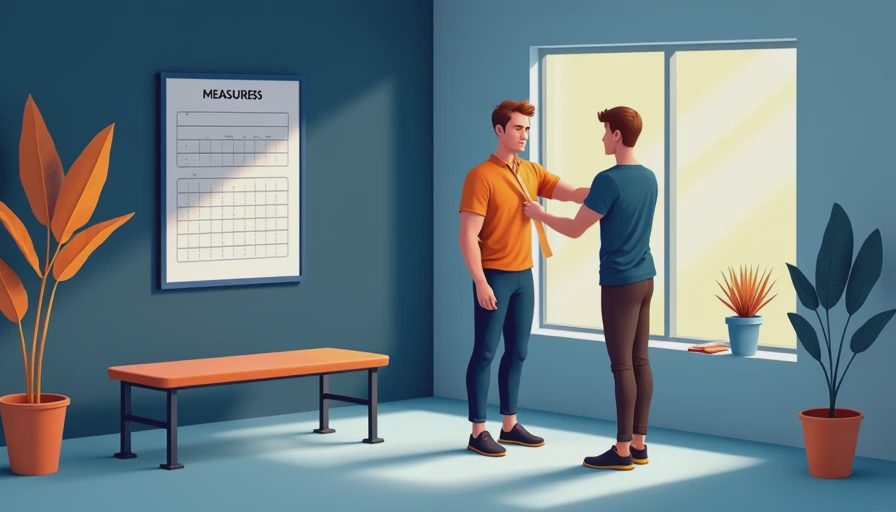
You need a flexible tape measure and another person. Stand naturally with your arms hanging loose. Do not pull your shoulders back like you are waiting for a military inspection. Good posture is fine; exaggerated posture produces a number your clothes will not match.
Have your helper place one end of the tape at the shoulder point where a sleeve seam would normally sit. Run the tape across the upper back, following a straight line rather than dipping down toward the shoulder blades. Stop at the matching point on the opposite shoulder. Keep the tape flat but do not pull it tight enough to press into your shirt.
Take the measurement twice. If the numbers differ by more than half an inch, do it again. Write down the result to the nearest quarter inch. For example, a measurement of 18 1/4 inches is more useful than simply calling yourself an 18-inch man.
A second method works when nobody is available. Lay a shirt or lightweight jacket that fits well on a flat surface. Measure straight across from shoulder seam to shoulder seam. This gives you the garment measurement, which is often about a half inch to an inch wider than your bare shoulder measurement. Try it on. That's what the fitting room is for.
Using your shoulder measurement when buying shirts
Dress shirts are usually labeled by neck size and sleeve length, not shoulder width. A 16-inch neck shirt with a 34/35 sleeve can still have a narrow or generous shoulder cut. If your neck fits but the shoulder seam sits halfway down your upper arm, the shirt is too broad through the shoulders. If the seam sits on top of your shoulder and the fabric pulls across your back, it is too narrow.
The average shoulder width for men should not convince you to choose a standard cut automatically. A man with a 17-inch shoulder measurement may prefer a slim shirt if his waist is narrow, while another man with the same shoulder measurement may need a regular cut because he carries more room through the stomach.
Check three places before buying. The shoulder seam should end near the shoulder bone. The upper back should allow you to reach forward without strong horizontal pulling. The armhole should not cut into your armpit when you move. A little extra fabric at the waist can be altered. A shoulder that is wrong is expensive and difficult to fix.
Jackets make shoulder width more important
A jacket exposes poor shoulder fit faster than a casual shirt. The seam should finish close to the natural edge of your shoulder, and the sleeve should hang cleanly from that point. If the shoulder extends too far, the sleeve forms a hollow wrinkle and the entire jacket looks droopy. If it is too narrow, you will see pulling near the upper arm and collar.
This is where knowing the average shoulder width for men can save you from chasing the wrong size. Suppose your chest measures 42 inches but your shoulders are broad. A 42 regular may close across the torso but pinch your upper back. A 44 may give you the needed shoulder room while leaving the waist loose. That larger jacket can often be adjusted through the sides. The smaller one cannot be made broader across the shoulders in any sensible, affordable way.
I saw this every December when men bought suit jackets for holiday parties. They would say, “I always wear a 42,” as if the number were a family rule. I would put the 44 on them, pin the sides, and hand them the mirror. Most walked out surprised. The label matters less than the line from your neck to your sleeve.
Common measuring mistakes to avoid
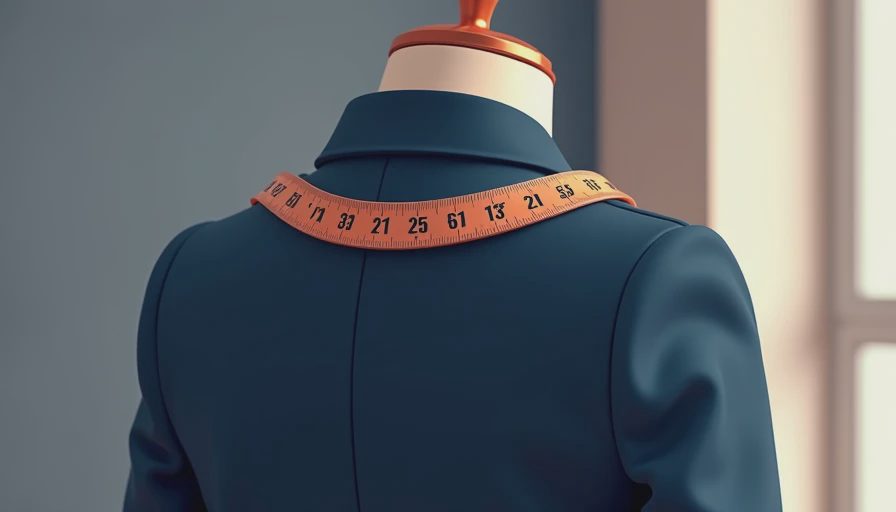
The first mistake is measuring around the body and calling that shoulder width. That number is closer to an upper-chest circumference and cannot be compared directly with a flat garment measurement. The second is measuring from the outside edge of one sleeve to the outside edge of another. Sleeves add width and distort the result.
The third mistake is standing stiffly. If you pull your shoulder blades together, you can add an inch or more. If you slump, you can make a correctly fitting jacket appear too narrow. Stand as you normally would while waiting in line at the grocery store.
The fourth mistake is trusting one shirt. A shirt made from stretchy cotton may feel comfortable even when the seams are too far out. A stiff oxford shirt may feel restrictive even when the measurement is technically correct. Use at least two garments and your body measurement before deciding what cut suits you.
A practical fitting checklist
Start with your bare shoulder measurement, then compare it with the garment's shoulder seam. Next, put on the item and raise your arms halfway. You should have room to move without the fabric climbing sharply. Button the shirt or jacket completely. The collar should rest against your neck, and the jacket should not pull into an X shape across the chest.
Look at the back in a mirror. A few small folds are normal, especially in a casual shirt. Deep diagonal wrinkles usually signal tension. A large ridge under the collar can mean the jacket is too broad or the collar is sitting away from your neck. Ask for the next size or a different cut before asking about alterations.
The average shoulder width for men is a reference point, not a fitting verdict. Your own tape measurement, a correctly placed seam, and five minutes of movement tell you much more than a chart online.
The bottom line from the fitting room
If you are shopping online, measure a shirt that already fits and compare the shoulder measurement with the seller's chart. Pay attention to return terms, since a shoulder seam cannot be corrected by simply tightening a button. In a store, take two nearby sizes into the fitting room and compare them in the same mirror.
The average shoulder width for men helps explain why standard sizes work for some bodies and fail for others. It is not a score, and being above or below the common range says nothing about whether you look good in a garment. Find the shoulder seam that lands where your shoulder ends, make sure you can move, and let the rest be handled by the cut or a competent tailor. That is how men leave with clothes they actually wear instead of another bag headed for the return counter.


No comments yet — grab the first one.