I can't tell you how many men have walked onto my floor in St. Louis wearing a dress shirt that fits everywhere except one place. The shoulders are fine. The collar doesn't choke. But the sleeve length is off — either exposing half their forearm when they reach for a handshake or swallowing their wrists like a wetsuit. Sleeve length is the most overlooked fit detail in men's clothing, and it's the one that gets shirts returned more often than any other. I've handed roughly 50,000 dress shirts to customers in thirty years, and most men have no idea what the numbers on the tag actually mean. Let's fix that.
Why Sleeve Length Matters More Than You Think
Everyone notices when a suit jacket fits right, but almost no one can say why. It's the sleeve. A jacket sleeve that stops at the right spot — about a quarter to a half inch above the shirt cuff — makes your arms look longer and your posture look better. Too long, and you look like you borrowed your dad's suit. Too short, and it feels like the jacket shrank in the closet. Sleeve length also affects how much wear you get out of a shirt. A cuff that ends at the wrong place rubs your wrist raw and frays at the buttons. In my experience, men who get the sleeves right come back for a second shirt. Men who don't come back to return it.
How to Measure Your Sleeve Length at Home
You don't need a tailor to get a reliable sleeve length measurement. Take a dress shirt that already fits you — maybe well, maybe not. Lay it flat on a table. Run a measuring tape from the center of the back collar, over the shoulder seam, and down to the end of the cuff. That number, in inches, is your sleeve length. For most adult men it falls between 32 and 35. That's the number you'll see on a dress shirt tag, right after the neck size. A 16-34 shirt means a 16-inch neck and a 34-inch sleeve. If you're between sizes, go with the longer one — it's easier for a tailor to take up a sleeve than to let it out.
Shirt Sleeves vs. Jacket Sleeves
This is where men get confused. A dress shirt sleeve and a suit jacket sleeve aren't supposed to be the same length. The jacket is always shorter. When you stand with your arms at your sides, the jacket cuff should sit at your wrist bone. A half inch of shirt cuff — no more — should peek out below the jacket sleeve. When you bend your arm, the jacket sleeve rides up. That's normal. The shirt sleeve is cut longer so it stays put. If your jacket sleeve covers your shirt cuff entirely, have the jacket sleeves shortened or buy a different size. That one detail changes the whole look of a suit.
The Wrist Bone Rule for Dress Shirts
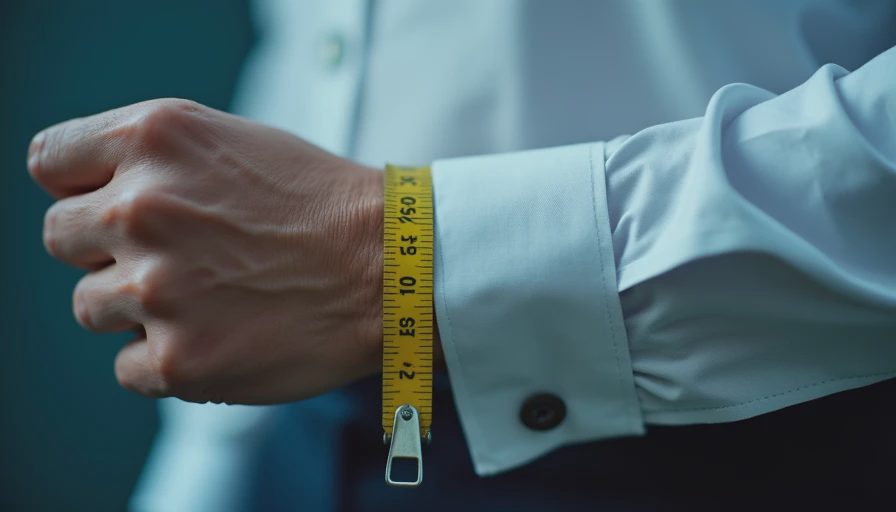
For the shirt itself, the rule is simple: the cuff should hit at the base of your palm, right where your wrist bends. When you straighten your arm, you should see a little bunch of fabric that disappears when you bend your wrist. If the cuff rides up past the wrist bone, it's too short. If it covers the top of your hand, it's too long. A proper sleeve fit also lets you wear a watch without the cuff fighting the watch face. I've told more than one customer to wear his watch to the fitting room so we can see how the sleeve lands. That's the kind of detail you don't get from online shopping.

Common Sleeve Mistakes I See on the Floor
The biggest mistake is buying a shirt by neck size and ignoring the sleeve number. A man with a 16-inch neck might grab a 16-32 because that's the default on the rack. Then he wears it once and wonders why he can't raise his arms. Another common error is rolling up the cuff of a dress shirt to hide too-long sleeves. That works for a casual look, but not for a wedding or a job interview. If a jacket feels tight in the shoulders, a tailor can adjust the sleeves. If a dress shirt has sleeves that are a full size too long, you're better off buying a different brand. Most mid-range brands offer the same neck size with multiple sleeve lengths. You just have to ask.
When to Have the Sleeves Shortened
Sometimes you can't find the right off-the-rack combination. That's when a tailor earns his keep. Shortening a jacket sleeve costs around $15 to $25 and takes a few days. Shortening a dress shirt sleeve is cheaper, but it involves moving the cuff and the placket, so it's not always worth it unless the shirt is expensive. I tell customers to budget for tailoring when they buy a suit. A $400 suit that fits perfectly after a $30 alteration looks better than a $600 suit straight off the rack. If you're on a budget, buy patterns that don't have bold stripes or checks — plain solid shirts are easier to alter without visible seams.
A Final Word on Sleeves
The sleeve is one of those things you can't fix with a shrug and a good attitude. It either works or it doesn't. Take the five minutes to measure yourself before you shop. Read the numbers on the tag instead of guessing. And when you're in the fitting room, move your arms around like you actually plan to use them. Reach for the top shelf. Shake a hand. Button the jacket. If the sleeves feel right, you'll know. And if you're standing in my store in St. Louis, ask me to double-check it for you. Try it on. That's what the fitting room is for.



No comments yet — grab the first one.