If you came here looking for a belt size guide, I can save you some wandering around the store: do not buy the same number as your pants and do not trust the old belt that has been bent into a question mark. In 30 years on a men's floor, I have watched plenty of decent men stand in front of the mirror with a belt that was either one hole too tight or hanging off the end like a dog leash. The fix is simple once you know what the number means and where to measure.
The belt size guide I use on the floor
The first thing to know is that belt size is usually not your waist size and it is not your pant size either. Most men's belts are sized to the hole you use in the middle, not the buckle end or the tip. If your waist measures 34 inches, a 36 belt often lands you in the sweet spot. If you wear heavier jeans, carry your pants a little lower, or like a little room in the buckle, 38 can make more sense. The belt should close comfortably on the middle hole, with two holes left for days when you are sitting more than you are standing.
A lot of returns start when a man guesses by memory. He says he has been a 36 for years, but his body and his pants have not read the same memo. One customer told me he needed a 40 because that is what he bought ten years ago. He left with a 38 after we measured the belt he already wore every week. That is the part most men miss in a belt size guide. The number on the tag is just a starting point. The fitting room and a tape measure settle the argument.
Measure the belt you already wear
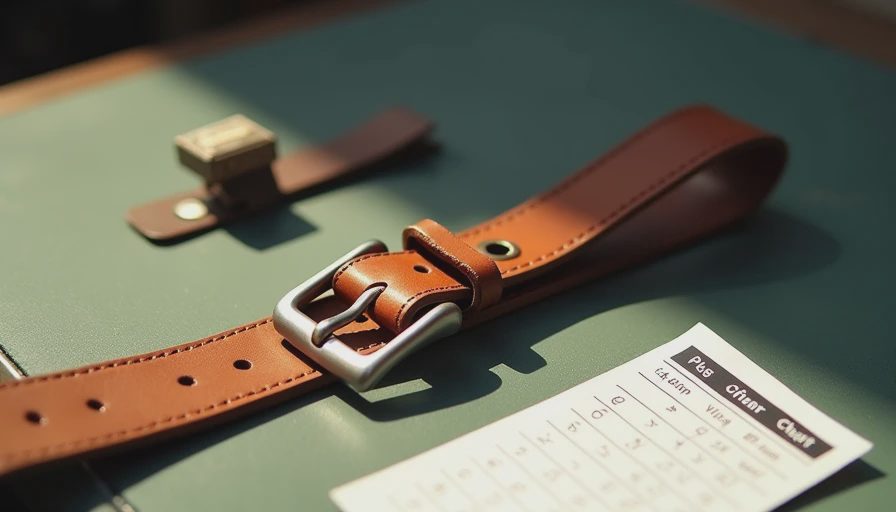
The easiest way to get the right number is to measure a belt you already like. Lay it flat and measure from the fold where the leather bends around the buckle to the hole you use most often. Do not measure the full length end to end, because that gives you a number that does not help anybody. If the hole you use is 38 inches from the fold, you want a 38 belt. That method works better than guessing from pant labels, especially because different brands cut pants with different rises and waist shapes.
If you do not have a belt to copy, use a soft tape measure around your body where your pants actually sit. Do it over a T-shirt or undershirt, not over lunch. Then add a couple of inches if you want the belt to land on the middle hole. A man who measures 35 inches around the waist is usually shopping in the 36 or 38 range, depending on the brand and the thickness of the pants. It is not fancy, but it works. Try it on. That's what the fitting room is for.

Width matters more than most men think
Size is only half the problem. Belt width has to match the pants. Dress belts are usually around 1 to 1.25 inches wide, which fits suit trousers and most office pants without fighting the belt loops. Casual belts for jeans and chinos often run 1.25 to 1.5 inches. Work belts can be even sturdier, but if the belt is too wide for the loops, nobody wins. You end up wrestling the thing every morning and then leaving it in the closet.
I tell men to bring the pants they wear most. A belt that looks fine with Dockers can be too narrow for heavy denim or too wide for a trim dress trouser. Leather belts also behave differently from woven or elastic ones. Leather is more structured and usually lasts longer, while woven belts give a little room on days when your waistline is not negotiating. If you are buying one belt for office clothes and weekend jeans, pick the pant type you wear most often and size for that first.
Common mistakes that send a belt back
The biggest mistake is buying the same number as your pants and calling it done. That works often enough to keep the rumor alive, but it is still a bad shortcut. Another one is measuring the whole belt from tip to tip and thinking that number belongs on the tag. It does not. The useful measurement starts at the buckle fold and ends at the center hole. A third mistake is ignoring how much the belt will be used. Leather stretches a little. Cheap leather stretches more than people expect, then cracks sooner than they planned.
A good belt size guide keeps you from buying the same mistake twice. I have seen men buy a belt that was too short because they wanted a snug look, then spend six months eating dinner with the buckle jammed in the first hole. I have also seen the opposite: a belt so long the tail flopped under the loops like a loose thread. Neither one looks right, and neither one feels right by noon. If you are between sizes, the cleaner move is usually to go up one size and use the middle hole.
What to ask for when you shop
When you are standing at the rack, ask three plain questions: what size is measured to the middle hole, what width fits the pants I wear, and how much adjustment the belt gives me. If you wear a lot of jeans, you might want a belt with five holes and a little more strap length. If you wear dress slacks during the week, you may want a slimmer buckle and a smoother finish so it slides through the loops without catching. A decent cobbler can punch an extra hole for a few dollars, but that is not a cure for a belt that is two sizes off.
The best shoppers I have seen do not try to make one belt do every job. They keep one for dress pants, one for jeans, and maybe one old standby for yard work or travel. That is not being fussy. That is just using the right tool. If you want the shortest belt size guide you'll ever need, try it on. That's what the fitting room is for.



No comments yet — grab the first one.