If you’ve ever stood in a fitting room holding a pair of pants that feels right everywhere except the waist, you know the frustration. Learning how to measure waist for pants is the first step to buying trousers that don’t require a belt to keep them up. After 30 years on the men’s floor in St. Louis, I’ve measured thousands of waists, and I can tell you the tape measure rarely lies. The tag does.
Why the Waistband Matters More Than the Tag
Men come to me all the time with pants that say 34 but fit like 36. The number on the tag is a starting point, not a promise. Different brands cut their waistbands differently. A pair of dress pants from one manufacturer might run a full inch larger than the same size from another. That’s why the actual measurement of your body is the only reliable reference. When you know your real waist number, you can walk into any store and immediately filter out the sizes that are a waste of your time.
I remember a regular who bought chinos online and ended up with a waistband that slid right down. We measured him in the store, found his true waist was 35.5, and sent him home in a 36 that fit. The size guide had been off by a full size.
The Tools You Need
You don’t need anything special. A flexible cloth measuring tape is the best tool because it follows the curve of your body. A metal tape won’t work. You also need a flat surface and a mirror if you’re measuring yourself. If you have someone to help, great—but you can do it alone. The key is to keep the tape level and snug, not tight. I’ve seen men hold their breath and suck in, and I’ve seen men let it hang loose. Both give you a number that’s wrong.
Step-by-Step: How to Measure Waist for Pants
Here’s the method I’ve used with customers for three decades. Take off your shirt and pants and stand comfortably in just your underwear. Find the natural waist, which is typically the narrowest part of your torso, right around your belly button or just above it. Wrap the measuring tape around your waist, parallel to the floor. The tape should sit against your skin, not digging in. You should be able to slip one finger between the tape and your body—that’s the correct tension.
Read the number where the tape meets itself. That’s your true waist measurement. For most men, this number is about two inches larger than the waist size you’ll buy. That’s because pants sit on the hips, not the natural waist, and manufacturers build in ease. If your measurement is 36 inches, you’ll likely wear a 34 in most pants. This surprises guys every day. They point to the tape and say, “But I measured 36, why do I need a 34?” I explain it every time: the pant waist is not the same as your body waist.
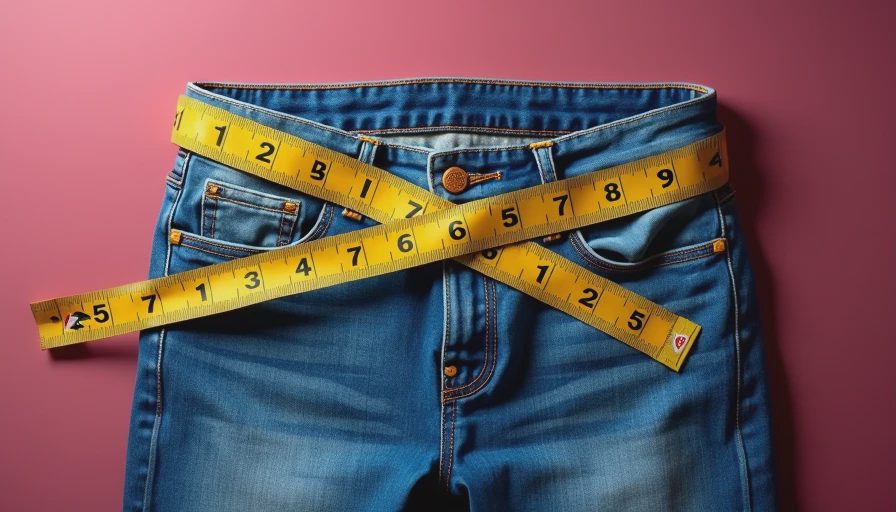
If you’re measuring for jeans, the same rule applies, but denim can stretch. A pair of Levi’s 501s in a 34 might start snug and loosen up over a day of wear. Size down if you’re between measurements, or size up if you prefer a relaxed fit. The tape gives you the truth; the fit gives you the final answer.
Common Mistakes I See on the Floor
The biggest mistake is measuring over your jeans. If you wrap the tape over a pair of thick denim, you add an inch or more. Always measure on bare skin or thin underwear. Another mistake is measuring too low or too high. Some guys measure at their hip, which is wider, and end up with pants that fall down. Some measure at their belly button, which is fine, but then they buy dress pants meant to sit lower. Know where you intend to wear the pants. For pants that sit at your hips, measure at that point instead.
A third mistake is pulling the tape too tight. I’ve had customers hand me a pair of pants with a waist that clearly was too small, insisting the measurement said 32. They’d been measuring like they were wrapping a tourniquet. The one-finger rule fixes that.
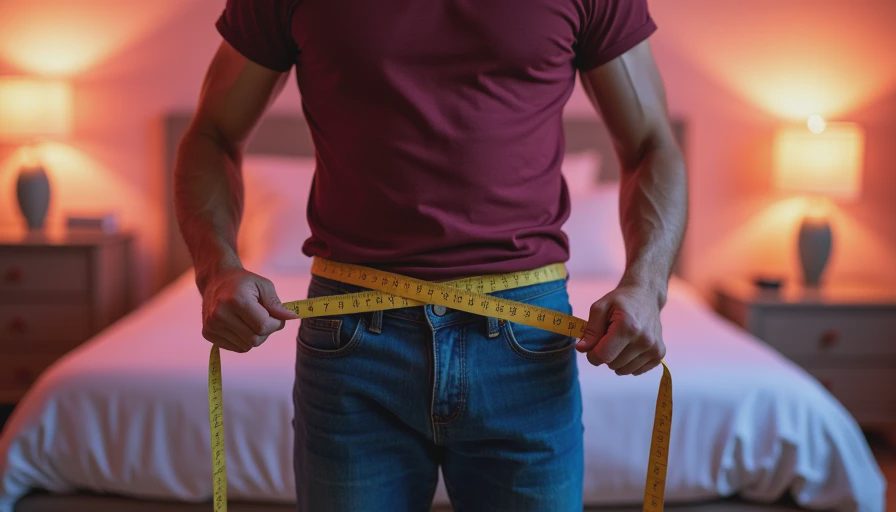
Another thing I see: men who measure once and think they’re done. Your waist changes over time, so measure every season.
What to Do When You’re Between Sizes
If your measurement falls right between two sizes, the rule of thumb is to size up if you’re between casual pants, and size down if you’re between dress pants—but only after you try both. Waistbands are much easier to take in than let out. A tailor can take in a 34 to fit a 33 for about $10 to $15 at my local shop. Letting out a 32 to a 33 usually means there’s not enough seam allowance to work with.
How to Measure the Waistband on Pants You Already Own
If you have a pair of pants that fits perfectly, you can reverse-engineer the measurement. Lay the pants flat, measure the waistband from one side to the other, and double that number. That’s the true waist size. Compare that to your body measurement to understand the brand’s sizing. For example, a 17-inch across waistband equals a 34. This trick helps when shopping online.
The Bottom Line
Learning how to measure waist for pants takes two minutes and saves you hours of returns. Do it once when you’re shopping for new pants, and keep that number in your phone. Whether you’re a veteran shopper or a first-timer, knowing how to measure waist for pants changes everything. Then use the fitting room anyway. Try it on. That’s what the fitting room is for.



No comments yet — grab the first one.