Work clothes for men are not a mystery, and they are not a place to get cute. If a shirt pulls across the back, if pants fight you when you sit down, or if a boot leaves you thinking about your feet by 10 a.m., the garment has already failed. I have handed enough sizes across the counter to know that most men do not need more options. They need the right handful of pieces that survive a week of bending, lifting, driving, and sweating without looking like they were dragged behind a truck.
The good news is that the useful stuff is usually easy to spot. You want fabrics that take a beating, seams that do not twist, and fits that let you move without hanging like a borrowed coat. That is the whole game. Try it on. That is what the fitting room is for.
What work clothes for men need to do first
Start with the job, not the label. A warehouse hand, a mechanic, a school custodian, and a salesman on his feet all day are asking different things from the same closet. One man needs stain resistance and knee room. Another needs a collar that stays neat under a jacket. A third needs shirts that can go through the wash three times a week and still come back in one piece. That is why work clothes for men have to be judged by wear, not by how they look on the hanger.
If you are shopping for a regular office, a good button-down in cotton or a cotton-poly blend will usually beat the trendy stuff because it presses cleaner and dries faster. If the job is rougher, heavier twill or duck cloth makes more sense than a thin fashion shirt that gives up after two washes. Pants are the same story. A pair of 7-ounce twill pants will feel sturdier than a flimsy khaki, and a little stretch can help if you climb ladders or get in and out of a truck all day.
The men who come back happiest are usually the ones who stopped trying to make one outfit do everything. They bought one set for the dirty days, one set for the cleaner days, and quit fighting the calendar.
Fabric weight, fit, and the parts that wear out first
This is where people save or waste money. A cheap shirt can look fine on the rack and still feel tired after ten washes. A better shirt usually starts with better yarn, tighter stitching, and a collar that does not collapse into a sad puddle by lunch. For pants, I look at the knees, the seat, and the waistband first. If the fabric is too light, the knees shine fast. If the rise is wrong, the pants slide when you sit. If the waistband gaps, you will spend all day tugging instead of working.
On the floor, I used to tell men to think in ranges, not miracles. A solid work shirt might run $25 to $45. Good work pants often land around $35 to $65. Boots are the place where cheap usually costs more later, because a $90 pair that leaves you sore will not feel like a bargain. A $120 to $180 pair with better support and a tougher sole often earns its keep in a month.
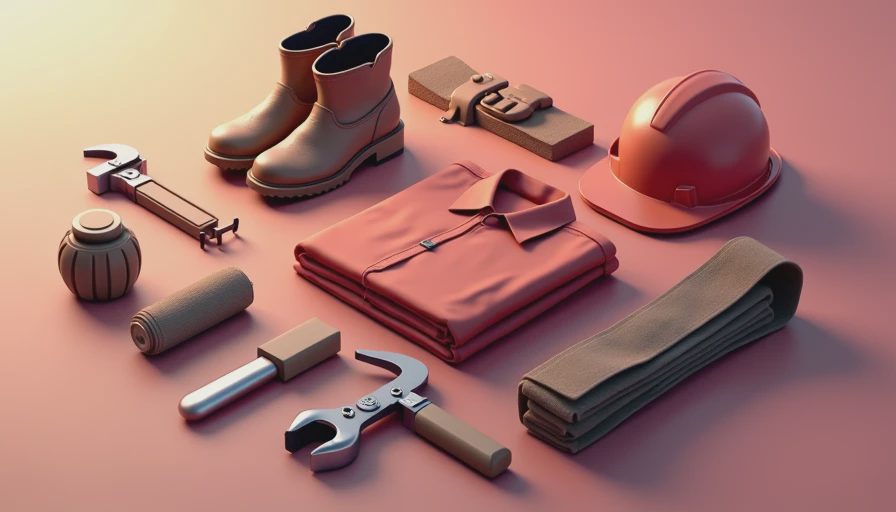
The other thing that gets overlooked is shrinkage. Cotton can tighten up if it was not prewashed well, and a man who likes a neat sleeve does not enjoy discovering that his shirt shrank an inch after the first laundry day. Check the care tag, and if you are between sizes, try the larger one. A work shirt is not a wedding tux. It is supposed to move.
Pockets, seams, and the small details that save a shift
A man does not need a dozen pockets. He needs the right ones. Chest pockets that actually close. Front pockets deep enough for gloves, a tape measure, or a phone that is not going to fly out when he leans over. Reinforced knees if he spends time crouching. Bar tacks at the stress points. Belt loops that do not look decorative. Those little things do more work than a fancy name ever will.
This is also where work clothes for men separate themselves from casual clothes pretending to be useful. A soft oxford shirt may feel fine at breakfast, but if the placket twists and the cuffs fray by spring, it was never built for the clock. Same with pants that are cut too slim through the thigh. They look tidy in the mirror and then complain every time a man climbs into a cab or kneels to fix a cabinet hinge.
One customer I remember well worked HVAC in St. Louis summers. He kept buying light pants because he thought lighter meant cooler. Then he finally tried a pair with a firmer twill and a little stretch. He came back three weeks later and bought two more pairs because the difference was simple: the better fabric breathed fine, and the better cut did not stick to him when he was bent over a blower motor. That is the kind of lesson you only need once.
Where to buy without getting fancy about it
You do not need a pilgrimage. Most men can build a workable closet at Macy's, Kohl's, Dillard's, or a similar store without going overboard. Dickies, Carhartt, Wrangler, Lee, Dockers, and Timberland PRO all make pieces that show up in real closets because they do the job. Dickies and Carhartt usually run tougher and heavier. Dockers and Lee are often easier if the job is cleaner and you want something that passes for office wear after hours. Levi's makes dependable jeans if denim is part of the uniform.
The trick is to handle the garment before you buy it. Feel the fabric. Hold the waistband. Bend the knee. If the shirt feels paper-thin in your hand, it will not improve later. If the boot has a hard seam where your toes flex, your foot will notice before the shift is over. Men spend too much time asking what is “good” and not enough time asking what feels solid.
A simple week of work clothes that does not waste money
If a man asked me to start from zero, I would tell him to buy three shirts, two pairs of pants, one dark pair of jeans if his job allows it, and one dependable pair of boots or shoes. That gives you enough to rotate without living in the laundry room. Add one overshirt or light jacket if mornings are cold and the warehouse or office thermostat has a personality problem.
For most guys, the smartest mix is one pair of tougher pants for heavy days, one pair that looks a little cleaner, and shirts in colors that do not punish a coffee spill. Navy, gray, tan, and white still earn their keep because they match without thinking. If your job gets dirty, get the darker shirt. If your job is mostly upright and indoors, a cleaner cotton blend will save you ironing time and still look respectable.
That is really the heart of work clothes for men: buy the pieces that survive your week, not somebody else’s catalog photo. If the fit is close, the fabric is honest, and the price makes sense when you divide it by the number of wears, you are in good shape. Try it on. That is what the fitting room is for.



No comments yet — grab the first one.